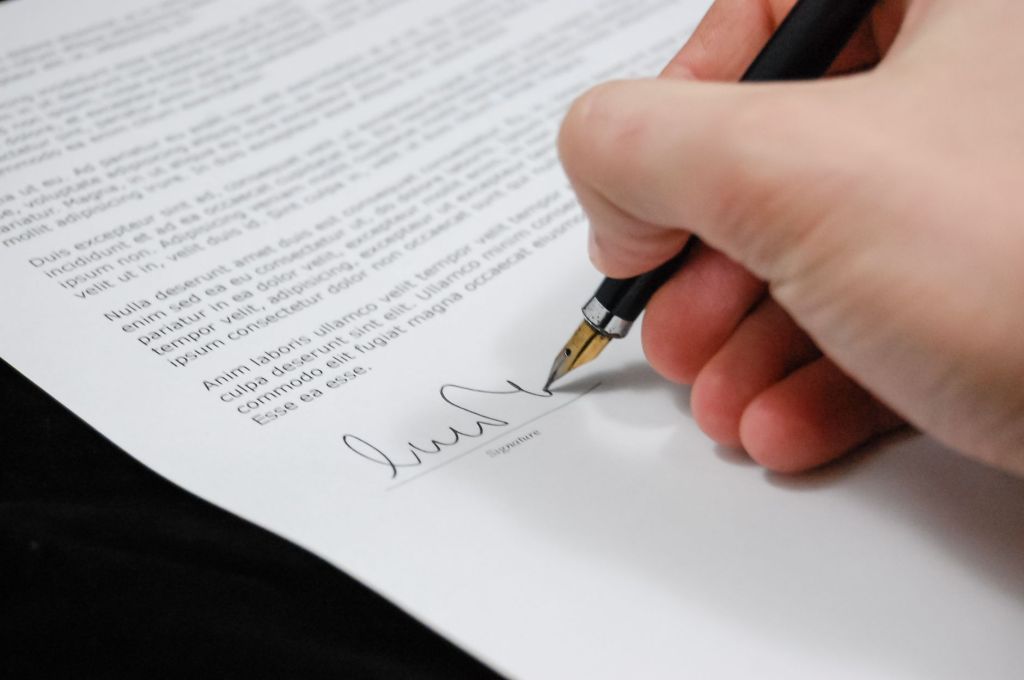
It usually happens in under five minutes. Someone slides a document across the table. “It’s a standard agreement,” “nothing unusual,” “everyone signs this.” You skim the first page, flip to the last, sign your name, and move on with your day. Months or years later, you discover that one sentence buried on page nine has cost you far more than you’d ever have guessed.
Most legal disputes don’t happen because someone set out to do something wrong. They happen because people assumed they understood what they were signing when they hadn’t actually read it closely. After years of working with contracts across commercial deals, real estate transactions, and corporate agreements, here’s the pattern I keep seeing: the most dangerous clause in any contract isn’t the one you don’t understand. It’s the one you never read at all.
A Contract Is More Than Paper
A good contract doesn’t just settle disputes after they happen, it prevents most of them in the first place. It answers the obvious questions before anyone has to ask them: who does what, by when, for how much, and what happens if someone changes their mind or the circumstances shift. The clearer those answers are up front, the fewer surprises show up later. A well-written contract isn’t a sign of distrust. It’s a sign both sides actually value the relationship enough to define it properly.
Stop Trusting “Standard Contracts”
“It’s our standard agreement” is one of the more misleading phrases in business. Standard for whom, exactly? Every business, every project, every risk profile is different, and whatever you’re signing, a lease, a consulting agreement, a partnership deal, needs to reflect the realities of that specific relationship, not someone else’s boilerplate template. Standard doesn’t mean fair. Don’t assume otherwise just because it’s on letterhead.
Who Exactly Is the Contract Between?
This sounds obvious, and it’s also where a surprising number of problems begin. Worth verifying every single time: the legal name of the company, its registration details, its registered address, whether the person signing actually has the authority to do so, and whether you’re contracting with a parent company or one of its subsidiaries. Get the parties wrong and enforcement becomes far harder down the line.
Scope of Work
This is probably the most underestimated clause in any agreement. “Develop a website” sounds clear enough until you start asking questions: how many pages, is it mobile-compatible, who provides the content, who owns the final design, how many rounds of revisions are included. Ambiguity here is where disputes are born. If a detail actually matters to the outcome, write it down.
Payment Terms
Don’t just glance at the total contract value. Look closely at how the money actually moves. Check the payment milestones and due dates, whether an advance is required, GST or other applicable taxes, penalties or interest on late payment, and the conditions under which a refund is owed. Cash flow problems rarely start because someone refused to pay. They start because the contract never clearly said when payment was due in the first place.
Term and Renewal
Every agreement needs to answer three basic questions: when does it start, when does it end, and what happens after that. A lot of contracts auto-renew unless one party gives written notice within a specific window, and missing that window can lock you in for another year without meaning to. Check the start date, the expiry date, the renewal terms, and the notice period. A calendar reminder here can genuinely save you thousands.
Termination
People sign contracts full of optimism. Fewer think about how they’ll eventually exit one, though the ones with more experience usually do. Can you terminate without cause? How much notice does that require? Are there penalties involved? What happens to payments already made or to confidential information once the relationship ends? Every business relationship eventually changes shape, so the contract needs to spell out how to leave it, not just how to enter it.
Limitation of Liability
This clause decides how much one party actually owes if something goes wrong. If a software bug ends up causing serious losses for your business, can you recover the full amount, or is liability capped at whatever the contract was worth? Most people only find out the answer once they’re already in litigation. Read this section slowly. It’s often the smallest paragraph carrying the biggest financial weight in the whole document.
Indemnity
Indemnity is essentially a promise. One party agrees to cover the other’s losses if certain things go wrong. Under Section 124 of the Indian Contract Act, 1872, a contract of indemnity legally binds the promisor to cover losses caused either by their own conduct or by a third party’s. Worth asking directly: what losses are actually covered, whose actions trigger the indemnity, is it capped or open-ended, and does negligence factor in at all? An unlimited indemnity clause can expose a business to real financial risk, so it’s worth knowing precisely what you’re agreeing to cover before you sign anything.
Confidentiality
Every business has something worth protecting: customer lists, pricing, strategy, product designs, financial data. A confidentiality clause needs to state clearly what counts as confidential, how long that confidentiality lasts, what the exceptions are, and what happens if it gets breached. Not every conversation needs an NDA behind it. But every relationship that actually matters to your business needs clear terms around confidentiality.
Force Majeure
Before 2020, most people skipped straight past this clause. Then the pandemic happened and suddenly everyone wanted to know exactly what it meant. In India, force majeure is grounded in Sections 32 and 56 of the Indian Contract Act, 1872, the provisions covering contingent contracts and agreements that become impossible to perform. It covers the extraordinary stuff nobody can control: natural disasters, war, government restrictions, epidemics, floods, earthquakes. The clause answers one question: what happens if neither side can perform because of something no one could have predicted? The better it’s drafted, the fewer disputes come up if a crisis actually hits.
Dispute Resolution
Nobody signs a contract expecting things to go wrong. If they do anyway, you need clarity fast, not a scramble to figure out where you even stand. Check which country’s or state’s law applies, which court has jurisdiction, whether disputes go to arbitration or straight to litigation, whether mediation is required first, the seat of arbitration, and the language the proceedings will be conducted in. Resolving a dispute in a distant city, or a different country entirely, multiplies your legal costs fast. Know where disagreements actually get resolved before you sign, not after.
The Mistakes People Make Over and Over
Even experienced professionals skim contracts instead of reading every page slowly. People assume templates are neutral when really they protect whoever drafted them, not necessarily both sides. Plenty of people avoid asking “what does this clause actually mean?” out of embarrassment, when it’s genuinely a five-minute conversation that can prevent years of litigation later. Verbal promises get trusted too easily. If someone says “don’t worry, we’ll sort that out,” get it in writing, because proving it later is much harder than it should be. And people rush because everyone else in the room is waiting, when pressure was never actually a legal emergency. Take the document home. Read it properly. Then sign.
A Simple Checklist Before You Sign
Worth confirming before putting your name on anything: you understand every obligation you’re taking on, the scope is clearly defined, the payment terms are fair, you have a real way to terminate the agreement, intellectual property ownership is clear, the liability limits are reasonable, what happens if circumstances change is addressed somewhere, and dispute resolution is spelled out rather than left vague. If you’re hesitating on any one of these, don’t sign yet.
Negotiation Isn’t About Winning Every Line
Good negotiators don’t fight over every sentence in a contract, that’s usually a waste of everyone’s time. The clauses that actually matter are the ones covering risk, payment, responsibility, termination, and dispute resolution. Nearly everything else is secondary. Negotiation was never really about winning. It’s about building an agreement both sides can genuinely honour.
Final Thoughts
Contracts are rarely exciting reading. They’re full of definitions and legal phrasing most people would rather skip past. But every business, partnership, and project that actually works rests on one thing: clear expectations, written down properly. A contract isn’t evidence that you don’t trust someone. It’s evidence that both of you care enough about the relationship to define it clearly.
The next time someone tells you “it’s just a standard agreement,” take your time anyway. Read every page. The most valuable part of any contract was never your signature. It’s everything you actually understood before you put it there.
This article is for general informational purposes and isn’t legal advice. Contract terms and enforceability vary by jurisdiction, so for anything specific to your situation, consult a qualified lawyer.
Sources:
- Indian Contract Act, 1872. Section 56 (Government of India, India Code)
- Contracts of Indemnity in India: Meaning, Key Elements
- The Interplay Between Section 32 and Section 56 of the Indian Contract Act, 1872. Mondaq
Related reading: If this resonated, you might also like The Future of Retail in India: 10 Trends Every Business Owner Should Watch.
 rahulphukan.com
Leave a comment