Some Books Enter Your Library. A Few Enter Your Life.
Every year I buy books with the best intentions. Some are about business. Some promise better leadership. Others teach negotiation, psychology or history. Most of them give me new information. A few change the way I think.
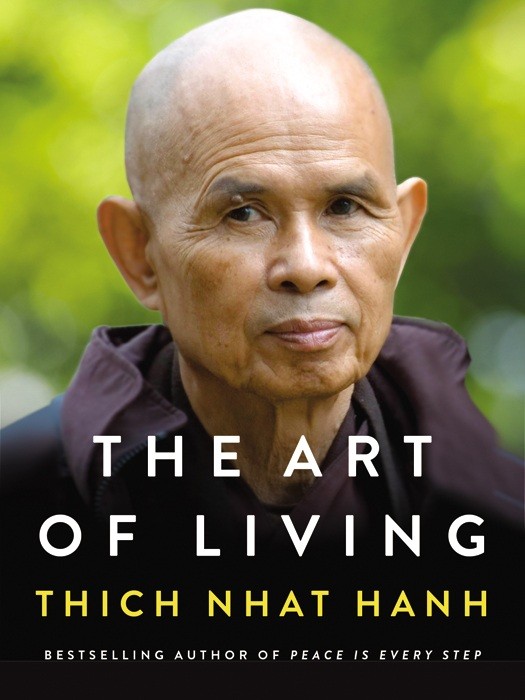
And then, once in a while, I come across a book that doesn’t try to make me smarter. It simply asks me to slow down. The Art of Living by Thích Nhất Hạnh was one of those books.
I didn’t race through it in a weekend. In fact, I kept putting it down. Not because it was difficult to read, but because it was difficult to ignore. Every few pages, I’d find myself staring out of the window, thinking about a sentence I’d just read.
It wasn’t offering complicated ideas or dramatic life advice. It was reminding me of things I already knew but had quietly forgotten: how to pay attention, how to appreciate ordinary moments, how much of life passes by while we’re busy preparing for the next thing.
The book is divided into seven chapters, and each one left me with a different question. Months after finishing it, those questions still return to me in unexpected moments: while making a cup of tea, sitting in traffic, walking through a park or sharing dinner with my family. These aren’t summaries of the book. They’re simply the reflections I carried with me after reading it.
1. Emptiness: We Are More Connected Than We Think
Emptiness means to be full of everything but empty of a separate existence.
Thích Nhất Hạnh, The Art of Living
The word emptiness initially felt strange. It sounded like something to avoid. But Thích Nhất Hạnh gives it an entirely different meaning. Nothing exists by itself. The chair you’re sitting on, the meal on your table, the phone in your hand: each exists because countless people, places and events came together to make it possible.
As I read this chapter, I looked at the cup of tea beside me. It suddenly felt different. That tea wasn’t just tea. It was rain falling over Assam, workers carefully plucking leaves, someone packing them, someone transporting them across the country, someone stocking a shelf, and finally someone boiling water in my kitchen.
It’s easy to believe we’re self-made. But none of us are. Every success in our lives carries fingerprints we can no longer see. As Indians, we often celebrate individual achievement. We proudly say someone “made it.” Yet behind every successful person is usually a family that made sacrifices, teachers who encouraged them, colleagues who supported them and strangers whose work quietly made their own possible.
This chapter didn’t make me feel smaller. It made me feel more grateful.
2. Signlessness: Nothing Really Disappears
Death is transformation. Death is continuation.
Thích Nhất Hạnh, The Art of Living
One image from the book has stayed with me more than any other. A cloud never dies. It becomes rain. The rain becomes a river. The river nourishes crops. The crops become food. Life doesn’t disappear. It transforms. That idea felt deeply comforting.
As we grow older, life becomes a collection of endings. Grandparents pass away. Friends move to different cities. Children leave home. Neighbourhoods change. Even the local chai stall that once felt permanent eventually shuts its doors.
We naturally mourn these changes. But perhaps nothing truly disappears. The people we’ve loved continue in our habits, our values, our stories and even our laughter. Maybe transformation is life’s quiet way of reminding us that love outlives presence.
3. Aimlessness: You Don’t Have to Chase All the Time
You already are what you want to become.
Thích Nhất Hạnh, The Art of Living
This chapter made me pause the longest. We’ve become incredibly good at planning life: school, college, career, promotion, house, retirement. Every milestone leads to another. There’s always another mountain waiting.
The problem isn’t ambition. The problem is believing happiness lives only on the next mountain.
I recognised myself in these pages. How many family dinners had I rushed through because my mind was already thinking about tomorrow? How many holidays had I interrupted with emails? How many evenings had disappeared while chasing productivity?
This chapter reminded me that life isn’t only about reaching somewhere. It’s also about noticing where you’ve already arrived.
4. Impermanence: Today Is More Precious Than We Realise
Thanks to impermanence, everything is possible.
Thích Nhất Hạnh, The Art of Living
This may have been my favourite chapter. We spend so much time wishing things would stay the same. But if they did, life would lose much of its beauty.
Think about the first rain after a long Indian summer. Or the excitement of Diwali returning every year. Or the joy of going home during festivals. These moments are special precisely because they don’t happen every day.
The same is true of ordinary life. One day, your parents will stop asking whether you’ve eaten. One day, your children will become too busy to ask you to play. One day, the roads you travelled every morning won’t be part of your routine anymore.
Impermanence isn’t a reason to feel anxious. It’s a reason to pay attention.
5. Non-Craving: You Already Have More Than You Think
We already have enough, and we already are enough.
Thích Nhất Hạnh, The Art of Living
Modern life is built on the promise of “more.” A bigger house. A newer phone. A higher salary. Another promotion. Another achievement. There’s nothing wrong with wanting to grow. But this chapter made me wonder whether we’ve confused growth with constant dissatisfaction.
I’ve met people with very little who seem deeply content. I’ve also met people with everything who never feel they have enough. Perhaps contentment isn’t found in what we own. Perhaps it’s found in learning to appreciate what already exists.
The happiest moments in my life have rarely involved buying something. They’ve involved people, conversations, meals, travel, laughter, time.
6. Letting Go: The Weight We Choose to Carry
…the mud of our suffering to grow lotuses of love and understanding.
Thích Nhất Hạnh, The Art of Living
Every one of us carries invisible luggage. A mistake we can’t forgive ourselves for. A relationship that ended badly. An opportunity we missed. A harsh sentence someone spoke years ago. We carry these memories as though holding on somehow changes the past.
This chapter gently suggests something different. Healing doesn’t always begin by finding answers. Sometimes it begins by putting something down.
That thought stayed with me. Not because it’s easy. But because it’s true.
7. Nirvana Is Now: Stop Waiting to Live
…coolness and freshness that we can all touch in this very life.
Thích Nhất Hạnh, The Art of Living
Perhaps the greatest lesson I took from this book was surprisingly simple. Life isn’t waiting somewhere in the future. It isn’t after the next promotion. Or after the home loan is paid. Or after retirement. Life is happening now.
During a conversation with your parents. While drinking tea on a rainy afternoon. During a train journey where strangers become friends. While watching children play cricket in the lane outside your house.
These moments don’t seem extraordinary when they happen. They become extraordinary only in memory. The tragedy isn’t that life is short. It’s that we’re often somewhere else while it’s happening.
Closing Thoughts
When I finished The Art of Living, I didn’t feel like I had discovered seven new ideas. In many ways, I already knew them: slow down, pay attention, listen more, be grateful, let go, live fully. But knowing something and living it are two very different things. That’s what this book reminded me.
Months later, I still catch myself asking simple questions. Am I really here? Am I listening? Am I rushing through something I’ll one day wish I had noticed?
If a book continues asking you questions long after you’ve closed its final page, perhaps that’s the highest compliment you can give it.
For me, The Art of Living wasn’t just a book about mindfulness. It was a quiet invitation to stop postponing life. And I think that’s an invitation all of us need from time to time.
Related reading: If this resonated, you might also like The Art of Saying No: Why It’s the Most Important Life Skill You’ll Ever Learn.


Leave a Reply