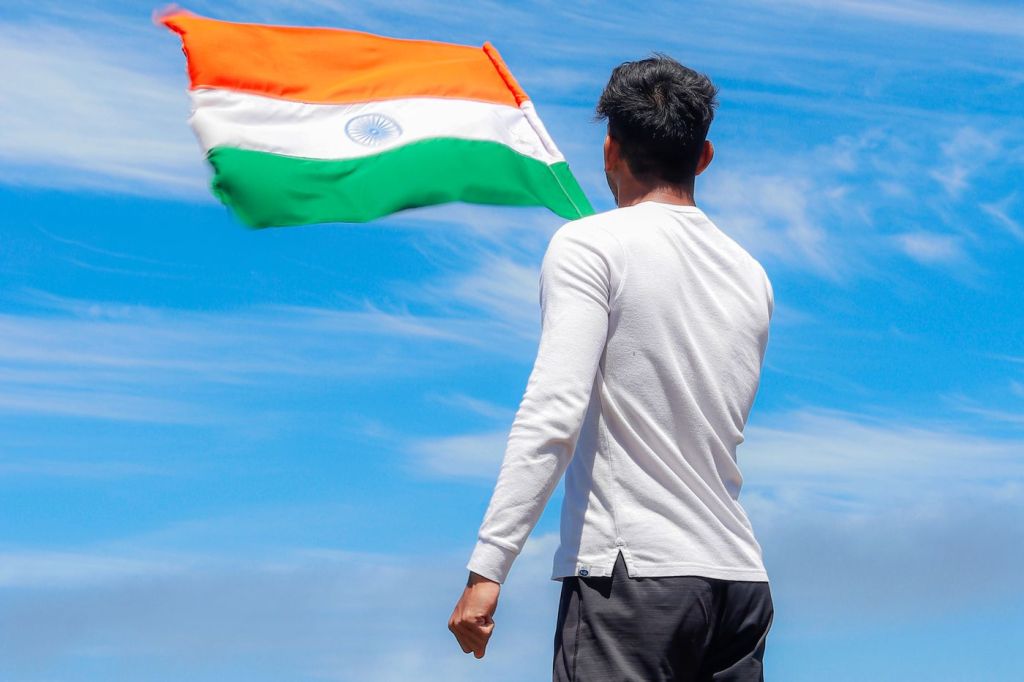
Think of a classroom where a student asks the teacher “why?” and the room goes quiet, as if something rude has been said. Or a family dinner where nobody argues with the head of the house. Many of us in India have been in rooms like these. A citizen asks questions. A subject with a feudal mindset often does not. A subject sees authority as something above them, like a feudal lord or the head of a family, and questioning it can feel like disrespect. A citizen understands that authority can be questioned without being rejected.
This matters in India because our democracy arrived after a long history of colonial rule, princely states, feudal relationships and caste hierarchy. The Constitution came into force in 1950, but attitudes built over centuries did not disappear with it. Political democracy changed the relationship between the state and its people almost overnight. Changing how people think about authority, equality and their own place in society takes far longer.
We have elections, parties and the right to choose our representatives, and yet voting alone doesn’t make someone an active citizen. We can vote and still expect our leaders to behave like rulers. We can admire a leader so completely that we stop examining their decisions. Democracy can exist in its formal sense while the habits needed to sustain it stay underdeveloped.
What the Constitution Says
A subject lives under the authority of a ruler. A citizen belongs to a political community and has rights, responsibilities and a voice in how it is governed. The Preamble begins with the words “We, the People of India”, which means the Constitution draws its authority from the people, and it promises justice, liberty, equality and fraternity. In 1973, in Kesavananda Bharati v. State of Kerala, the Supreme Court held that Parliament’s power to amend the Constitution is not unlimited. It cannot alter the Constitution’s basic structure. The judgment established an important principle: even the institution with the power to amend the Constitution must operate within constitutional limits.
The Constitution gives those principles legal weight. Article 14 guarantees equality before the law, Article 15 prohibits discrimination by the State on grounds that include caste, Article 16 guarantees equality of opportunity in public employment, and Article 17 abolishes untouchability. Together they say that a person’s birth should not decide their legal dignity. But that raises a harder question: can political democracy work fully when society is still organised around inherited inequality?
Ambedkar’s Warning
Dr B. R. Ambedkar put that question directly. In a 1953 BBC interview, he argued that parliamentary democracy would struggle in India because the social structure rested on inequality, and he named caste as the main obstacle. Two people can hold the same vote and live with very different degrees of social freedom. Political equality is essential, but it stays incomplete while hierarchy denies people equal dignity in everyday life.
He had made the same case in his speech to the Constituent Assembly on 25 November 1949. Political democracy, he said, had to rest on social democracy, a way of life that treats liberty, equality and fraternity as connected, not as separate ideals. In the same speech he warned against hero worship in politics. Gratitude and admiration have a place in public life, but devotion that replaces independent judgment puts democratic institutions at risk. There is a difference between respecting a leader and surrendering our judgment to one.
Indian law does try to address this, through laws such as the Protection of Civil Rights Act, 1955 and the Scheduled Castes and the Scheduled Tribes (Prevention of Atrocities) Act, 1989. But law can only do so much. If people still believe some individuals are naturally owed more respect than others, the promise of equality stays under pressure. Democracy needs institutions, and it also needs citizens who take equality seriously in how they behave every day.
The Right to Question
Dissent and debate let different ideas meet, help us catch mistakes, and make us consider experiences other than our own. The Constitution protects this space through Article 19, which guarantees freedom of speech and expression and the right to assemble peacefully, subject to reasonable restrictions. These are rights, not favours handed out by those in power.
The Supreme Court has shown how this works in real life. In 2015, in Shreya Singhal v. Union of India, the Court struck down Section 66A of the Information Technology Act as unconstitutional. Its vague and overbroad language could criminalise online expression and discourage people from speaking freely. The judgment illustrates why restrictions on speech must meet constitutional standards. In 2018, in Mazdoor Kisan Shakti Sangathan v. Union of India, the Court said peaceful protest is a right, but one that has to be balanced against the needs of the people around it and against public order. Taking part in a democracy means sharing space with others, and that takes some give and take.
None of this means every disagreement is justified. Questioning authority is not the same as rejecting it. Citizens also have a duty to respect the rights of others, weigh evidence and accept that their own views can be challenged. The purpose of dissent isn’t to make disagreement permanent. It is to make sure agreement isn’t simply demanded.
Citizenship also needs information. In 2002, in Union of India v. Association for Democratic Reforms, the Supreme Court said voters have a right to know basic facts about the people asking for their vote, such as any criminal cases against them, their assets and their education. In 2013, in People’s Union for Civil Liberties v. Union of India, the Court directed the introduction of a “None of the Above” (NOTA) option on electronic voting machines. It allows voters to register their lack of support for all the candidates on the ballot. NOTA does not automatically invalidate an election, but it recognises that an informed voter should have a way to express disapproval of every available option. This is harder now, when information is abundant and reliable information is not always easy to spot. A citizen has a responsibility to check sources before passing claims on.
What a Citizen Does
These ideas apply well beyond politics. Authority exists in workplaces, schools, communities and families, and in each of them the real test is whether someone can offer a different view without being treated as disloyal.
Politics doesn’t stop at elections or Parliament. The air we breathe, the safety of our streets, the schools available to us and the treatment of workers are all shaped by public decisions, whether or not we engage with them. There is nothing wrong with being uninterested in party politics, but being apolitical doesn’t make anyone independent of political life. It may only mean leaving decisions that affect us to others. Citizenship doesn’t require everyone to become an activist. It asks for some awareness of how decisions are made and a willingness to take part when it matters, even if that is as simple as voting thoughtfully, checking a claim before sharing it, or asking why a public service is failing.
For a young Indian, I think the most useful thing to understand is that being a citizen means more than voting for a government and waiting for it to deliver. A subject asks what the ruler permits. A citizen asks what their rights are, what responsibilities come with them, and what limits the Constitution places on those who govern.
Democracy is more than the right to choose who governs us. It is also the responsibility to take part in the society we share. A citizen doesn’t just live under a system of government. A citizen helps sustain the principles it rests on.
Books to Read Next
- Annihilation of Caste by B. R. Ambedkar
- The Argumentative Indian by Amartya Sen
- India After Gandhi by Ramachandra Guha
- The Indian Constitution: Cornerstone of a Nation by Granville Austin
- A People’s Constitution by Rohit De
- India’s Founding Moment by Madhav Khosla
- 10 Judgements That Changed India by Zia Mody
- You Must Know Your Constitution by Fali S. Nariman
- Offend, Shock, or Disturb by Gautam Bhatia
- Looking Away by Harsh Mander
Cases and Constitutional References
- Union of India v. Association for Democratic Reforms (2002): voters’ right to know relevant information about election candidates. Read the judgment
- Shreya Singhal v. Union of India (2015): freedom of expression and the constitutional validity of Section 66A of the Information Technology Act. Read the judgment
- Mazdoor Kisan Shakti Sangathan v. Union of India (2018): peaceful protest, public order and the rights of others. Read the judgment
- Kesavananda Bharati v. State of Kerala (1973): limits on Parliament’s power to change the Constitution. Read the judgment
- People’s Union for Civil Liberties v. Union of India (2013): introduction of the NOTA option on voting machines. Reported at (2013) 10 SCC 1; decided 27 September 2013.
- Constitution of India: Preamble and Articles 14, 15, 16, 17 and 19. Read the Constitution
- Dr. B. R. Ambedkar’s 1953 BBC interview on parliamentary democracy and caste. Watch the archival interview
- Dr. B. R. Ambedkar’s speech to the Constituent Assembly on 25 November 1949. Read the debate
Related reading: If this resonated, you might also like Why People Follow Some Leaders and Ignore Others.


Leave a Reply