A drone shot of a mountain can show us its most spectacular view. But it can never show us what it will feel like to stand there ourselves.
I realised this after spending time watching travel videos on Instagram and other social media platforms. The more I watched, the more I felt that something was being taken away from the experience: the surprise of arriving somewhere without knowing exactly what to expect. Videos promising the best things to do often led me to crowded, touristy places that I didn’t particularly enjoy. I began to see these videos as spoilers. They showed me what someone else had experienced before I had the chance to form my own impression.
Travel has always involved anticipation. Today, though, we can see a destination from a hundred different angles before we arrive. We know the famous viewpoint, the popular café and the photograph everyone takes. By the time we get there, the place may be new to us, but much of its experience already feels familiar.
It raises a question worth asking: are we travelling to experience a place, or to prove we were there?
When seeing replaces experiencing
Social media has made discovering places easier. A short video can introduce us to a neighbourhood, a local restaurant or a culture we might never otherwise encounter. But these same videos can shape our expectations so completely that we arrive looking for a particular image rather than experiencing the place itself.
Take a monastery, for instance. One person might see a spiritual refuge, another a historical site, and someone else an architectural marvel. The building is the same, but the experience is different. What we take from a place depends on who we are, what we notice and what we bring with us.
Yet travel content often presents places as if there were a correct way to experience them. This is the unmissable view, the restaurant you must try, the hidden spot everyone should visit. We follow the recommendations, tick the boxes and move to the next stop.
I have visited places I didn’t particularly enjoy. That doesn’t make those places bad, nor does it mean the people who recommended them were wrong. Sometimes our tastes differ. Sometimes reality doesn’t match the image. On occasion, I have questioned how authentic a recommendation or portrayal was. But I have also learnt to accept that travel is subjective.
Not every place has to move us. Not every journey has to live up to its reputation.
The photograph comes first
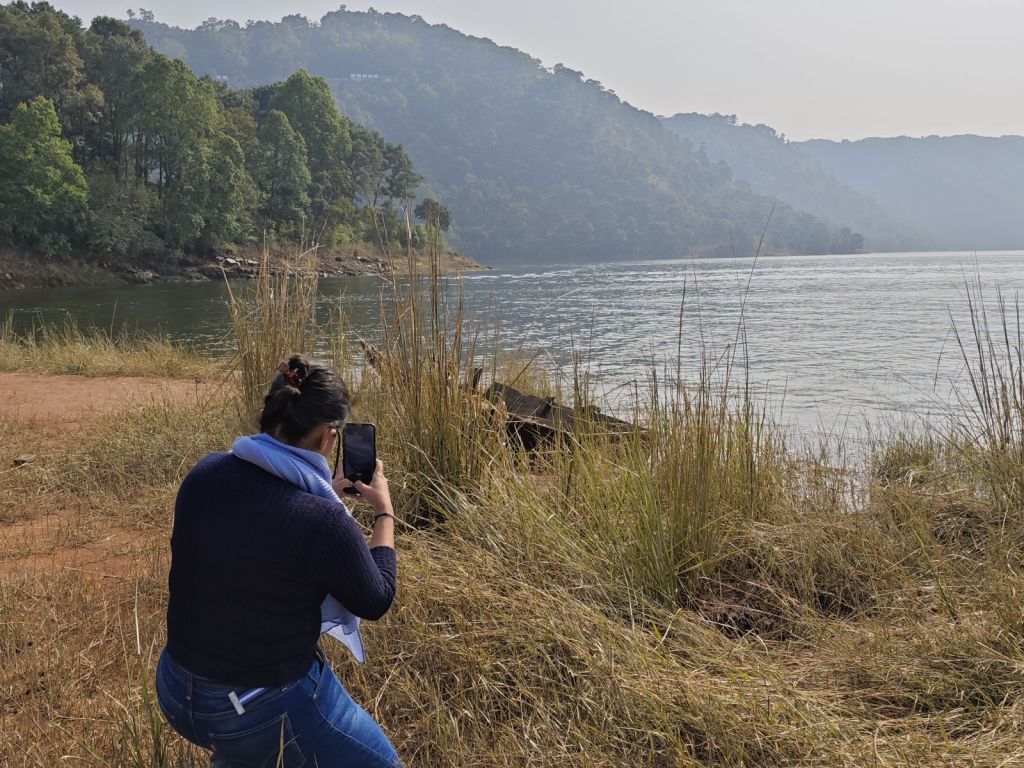
Watch what happens when people arrive at a beautiful viewpoint or watch a sunset. Often, the first instinct is to reach for the phone. A photograph, then one with friends or family, perhaps a video, followed by a few more attempts to get the right angle.
I enjoy photography myself. I take pictures because I like the process, and sometimes I share them online for the same reason. But there have been many sunsets and walks through forests when I have been so absorbed in the experience that I have forgotten to take a photograph. I don’t maintain an Instagram catalogue of every place I have visited, and sometimes I don’t even mention where a photograph was taken.
What interests me is how quickly documenting a moment can become the main activity. We travel to see something and then spend much of our time looking at it through a screen. The photograph becomes the objective, while the actual experience becomes almost incidental.
At times, the pursuit of the perfect shot also intrudes on other people’s space. A public viewpoint or a shared landmark becomes a place where everyone is trying to create their own version of the same image. The desire to capture a moment can get in the way of someone else’s chance to enjoy it.
There is also the fear of missing out. When everyone else is taking a photograph, we may feel we should take one too. When a destination appears on every bucket list, we may feel we need to visit it. We can end up documenting an experience simply because it seems important to have had it.
The need to show that we are having a good time
This is about more than travel. It says something about human behaviour.
We have always wanted recognition. We tell stories about where we have been, what we have achieved and the interesting things we have done. Social media hasn’t invented that instinct; it has made it easier to indulge, with a much larger audience watching.
A holiday can become another way of presenting ourselves to the world: the person who visits unusual places, finds the right restaurants and lives a life full of memorable experiences. We don’t just have an experience. We also begin to think about how it will look to others.
I don’t exempt myself from this. None of us is holier than thou. Sometimes we share a photograph because it is beautiful. Sometimes we enjoy the attention it receives. There is nothing unusual about wanting to be seen or appreciated. The question is what happens when that desire begins to influence how we experience the moment itself.
Think of the routine exchange, “How are you?” The expected answer is often “I’m fine,” whether or not that is how we really feel. We have learnt to present the version of ourselves that fits the occasion.
Our travel stories can work in much the same way. We share the spectacular view, the perfect meal and the wonderful holiday. We rarely announce that we travelled a thousand miles and found a place disappointing. We tend to romanticise our experiences, perhaps to impress others, perhaps to reassure ourselves that the journey was worth the effort.
After all, if we travelled so far to get somewhere, shouldn’t it have been wonderful?
Sometimes it is. Sometimes it isn’t. Both are honest experiences.
What a photograph cannot capture
Some sunsets cannot be adequately captured in a photograph. The same is true of standing quietly in a forest or watching wildlife in a national park. We don’t have to photograph every animal or record every moment to prove that we were there.
A photograph can preserve a memory, but it cannot contain the whole experience: the sounds, the air, the changing light or the feeling of being present. Sometimes the best thing we can do is observe life unfolding without trying to turn it into content.
This doesn’t mean every moment must be profound. Travel can be ordinary, tiring, disappointing or simply fun. We don’t have to return from every journey with a new philosophy or a story that makes us sound more interesting.
But there is a difference between having been somewhere and having experienced being there. The first can be demonstrated with a photograph. The second asks for something less visible: attention.
And attention doesn’t always mean putting the phone away. It means knowing when to use it and when to look beyond it.
Social media isn’t the enemy
It would be unfair to blame Instagram and TikTok for everything that has changed about travel. Social media has encouraged people to explore, introduced travellers to different foods and cultures, and helped small businesses reach audiences they might never otherwise find. A recommendation from someone who lives in a place can lead us to an experience that no conventional travel guide would have suggested.
I enjoy discovering places through people who live there. Basic online research has its place, but I often find the more interesting part begins after arriving: walking around, talking to people and seeing what catches my attention. There is a particular pleasure in encountering something for the first time, without already knowing what it is supposed to mean.
The problem isn’t sharing our travels. It is allowing the image of an experience to become more important than the experience itself. It is arriving with expectations so fixed that we leave little room for surprise, or pursuing a photograph without considering the people around us.
Social media can help us discover the world. It can also encourage us to experience the world as an audience might expect us to.
Recognising the difference is up to us.
Been there, or been present?
I don’t think there is one correct way to travel. Some people plan every detail; others prefer to discover places as they go. Some take hundreds of photographs, while others hardly use their phones. None of these choices, by itself, tells us how deeply someone has experienced a place.
I am more interested in what happens when we start viewing a moment from the perspective of the people who might see it later. Are we taking the photograph because something has moved us, or because we feel we ought to capture it? Are we visiting a place out of curiosity, or because everyone says it is worth visiting?
The answers aren’t always clear, even to ourselves. Mine aren’t either.
Perhaps the next time we watch a sunset, walk through a forest or arrive somewhere unfamiliar, we can take the photograph if we want to. But we can also allow ourselves a few moments before reaching for the phone. Look around. Notice what is happening. Let the place be what it is, rather than what we expected it to be.
The photograph can wait.
The world doesn’t need proof that we were there. We need to give ourselves the chance to be there in the first place.
Related reading: Travel Without a Plan: Why I Prefer Going With the Flow


Leave a Reply